A Circumcision and Male Genital Aesthetics Center provides specialized medical and surgical care for men seeking to address foreskin disorders, improve genital appearance, or correct anatomical abnormalities. At Men’s Health Center in Ho Chi Minh City, circumcision and male genital aesthetic services are approached from both functional and cosmetic perspectives. With professional evaluation, individualized treatment planning, and appropriate surgical techniques, men can receive care designed to improve genital comfort, hygiene, appearance, and overall quality of life while maintaining realistic expectations about treatment outcomes.
1. What Is a Circumcision and Male Genital Aesthetics Center?
A Circumcision and Male Genital Aesthetics Center is a specialized healthcare facility focusing on the diagnosis, treatment, and surgical management of conditions affecting the male external genital organs.
Unlike general cosmetic clinics, a specialized andrology center considers not only the appearance of the penis but also its anatomical structure, urinary function, sexual function, and long-term health.
Male genital procedures may be performed for different reasons:
- Medical purposes: Treating phimosis, recurrent foreskin inflammation, scar tissue, or other structural problems.
- Functional improvement: Correcting anatomical restrictions that cause discomfort during erections or sexual intercourse.
- Aesthetic purposes: Addressing concerns about genital symmetry, shape, or appearance.
- Reconstructive purposes: Managing selected congenital abnormalities, injuries, or complications from previous procedures.
A qualified specialist should determine whether surgery is necessary and whether a less invasive treatment could achieve the desired outcome.
At Men’s Health Center, male genital care forms part of a broader approach to men’s physical, sexual, reproductive, and psychological health.
2. When Is Circumcision Medically Recommended?
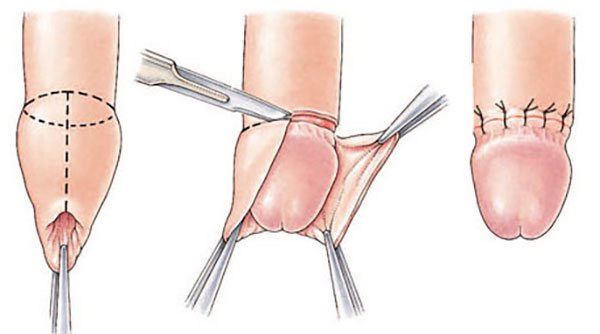
Circumcision is a surgical procedure involving the removal of the foreskin, the skin covering the head of the penis.
Although circumcision may be performed for personal, cultural, or religious reasons, certain medical conditions make surgical evaluation particularly important.
2.1. Phimosis (Tight Foreskin)
Phimosis occurs when the foreskin cannot be retracted normally over the glans penis.
In adults, it may cause:
- Pain or tightness during erections.
- Difficulty cleaning beneath the foreskin.
- Recurrent irritation or inflammation.
- Cracking or bleeding of the foreskin.
- Discomfort during sexual intercourse.
Not every case of phimosis requires surgery. Depending on the cause and severity, doctors may recommend topical corticosteroid treatment or other conservative measures before considering circumcision.
However, persistent scarring or severe narrowing may make surgery the more appropriate option.
2.2. Recurrent Balanitis and Balanoposthitis
Balanitis refers to inflammation of the glans penis, while balanoposthitis involves both the glans and the foreskin.
Common symptoms include redness, swelling, itching, soreness, and abnormal discharge.
These conditions may be associated with infections, irritants, skin diseases, or underlying medical conditions such as diabetes.
When inflammation repeatedly returns despite appropriate treatment, circumcision may help reduce problems associated with the foreskin.
Importantly, the underlying cause should still be identified and treated.
2.3. Foreskin Scarring and Lichen Sclerosus
Some men develop progressive narrowing of the foreskin due to chronic inflammatory skin conditions.
Lichen sclerosus, for example, can cause:
- Whitish skin changes.
- Foreskin tightening.
- Painful skin fissures.
- Difficulty retracting the foreskin.
- Changes affecting the urinary opening in more advanced cases.
Circumcision may be recommended when significant foreskin scarring is present. Some patients require additional evaluation or treatment when the disease extends beyond the foreskin.
2.4. Recurrent Foreskin-Related Hygiene Problems
Some men experience difficulty maintaining genital hygiene because of a tight foreskin or other anatomical limitations.
Circumcision can make cleaning the glans easier, although uncircumcised men with a healthy, retractable foreskin can generally maintain good hygiene without surgery.
Therefore, hygiene alone does not automatically establish a medical need for circumcision.
2.5. Paraphimosis: A Condition Requiring Urgent Care
Paraphimosis occurs when a retracted foreskin becomes trapped behind the glans and cannot return to its normal position.
The resulting swelling may compromise blood circulation.
Paraphimosis is a medical emergency. Men experiencing this condition should seek immediate medical treatment rather than wait for a routine circumcision appointment.
After emergency treatment, a specialist may discuss whether circumcision is appropriate to prevent recurrence.
3. Male Genital Aesthetic Procedures: What Options Are Available?
Male genital aesthetics is a field involving selected procedures intended to improve genital appearance or correct anatomical concerns.
However, not every aesthetic procedure provides a proven medical benefit, and some carry substantial risks.
A responsible circumcision and male genital aesthetics center should carefully distinguish established reconstructive procedures from elective enhancement techniques supported by limited long-term evidence.
3.1. Aesthetic Circumcision
Aesthetic circumcision combines the medical objectives of foreskin removal with attention to the final appearance of the surgical site.
Important considerations include:
- Appropriate removal of excess foreskin.
- Preservation of sufficient penile skin for comfortable erections.
- Symmetrical wound closure when anatomically possible.
- Careful management of bleeding.
- Minimization of unnecessary tissue injury.
- Appropriate postoperative wound care.
The final appearance depends on individual anatomy, surgical technique, scar formation, and healing.
Aesthetic circumcision should never prioritize appearance at the expense of penile function.
3.2. Penile Frenulum Correction
The frenulum is a band of tissue connecting the foreskin to the underside of the glans penis.
In some men, the frenulum is unusually short, a condition known as frenulum breve.
Possible symptoms include:
- Pulling discomfort during erections.
- Pain during sexual activity.
- Repeated tearing of the frenulum.
- Bleeding following intercourse.
Frenuloplasty is a procedure that releases or reconstructs the restrictive tissue.
Not all patients with a short frenulum need circumcision. A urologist or andrologist can determine whether frenuloplasty, circumcision, or another treatment is appropriate.
3.3. Correction of Penile Skin and Contour Abnormalities
Certain anatomical problems may affect penile appearance and function.
Examples include excessive scarring following previous procedures, abnormal skin attachments, or selected congenital conditions.
Depending on the diagnosis, reconstructive techniques may be considered to improve tissue alignment or relieve functional restrictions.
These procedures require particular attention to preserving blood supply, sensation, and sufficient skin coverage.
3.4. Evaluation for Penile Girth Enhancement
Some men seek treatment because they are dissatisfied with penile circumference.
Available approaches described in medical literature include selected injectable fillers and other tissue augmentation techniques.
However, important limitations remain:
- Cosmetic results may be temporary or unpredictable.
- Uneven contours or palpable nodules may develop.
- Infection, inflammation, or tissue injury may occur.
- Some treatments require repeated procedures.
- Long-term safety evidence is limited for several techniques.
International sexual medicine recommendations emphasize detailed counseling before elective penile augmentation.
In particular, permanent injections involving silicone, paraffin, or petroleum-based substances should be avoided because of their potential for serious complications.
Men considering penile enhancement should undergo an anatomical and psychological assessment before making a decision.
Penile enlargement is not a proven treatment for erectile dysfunction, premature ejaculation, or infertility.
4. Why Specialist Expertise Matters in Male Genital Surgery
The penis contains interconnected structures responsible for urination, erections, sensation, and sexual activity.
Even relatively small surgical interventions may affect these functions if performed improperly.
Therefore, the expertise of the treating physician plays a central role in surgical planning and risk reduction.
4.1. Understanding Male Genital Anatomy
An experienced urologist or andrologist must evaluate the foreskin, glans, frenulum, penile shaft, urethral opening, and surrounding tissues.
This assessment helps identify anatomical variations that may influence the surgical approach.
4.2. Preserving Sexual and Urinary Function
The objective of male genital surgery should not be limited to creating a visually acceptable result.
Appropriate treatment planning must also consider:
- Preservation of penile sensation.
- Comfortable erections.
- Normal urinary function.
- Adequate skin mobility.
- Prevention of excessive scarring.
- Long-term patient comfort.
No surgical technique can guarantee that sensation or sexual experience will remain completely unchanged.
4.3. Individualized Treatment Rather Than Routine Surgery
Two patients seeking circumcision may have entirely different medical needs.
For example, one patient may have severe phimosis, while another may have a normally retractable foreskin and purely aesthetic concerns.
These situations require different discussions regarding indications, expected benefits, alternatives, and risks.
Individualized evaluation reduces the likelihood of unnecessary procedures.
5. What Happens During a Circumcision Consultation?
An appropriate consultation is an essential part of surgical safety.
At a specialized men’s health facility, the evaluation generally includes several stages.
Step 1: Medical History Assessment
The doctor asks about current symptoms, previous genital infections, surgical history, allergies, medications, and relevant medical conditions.
Patients should disclose any history of bleeding disorders, diabetes, or anticoagulant medication use.
Step 2: Physical Examination
A focused genital examination helps assess foreskin mobility, inflammation, skin changes, and penile anatomy.
Additional tests may be recommended when infection, diabetes, or other health concerns are suspected.
Routine extensive laboratory testing is not necessary for every healthy patient undergoing a minor procedure.
Step 3: Discussion of Treatment Options
The physician explains whether surgery is indicated and discusses available alternatives.
For elective procedures, the consultation should also address personal motivations, aesthetic expectations, and the limits of achievable results.
Step 4: Informed Consent
Before surgery, patients should understand the proposed technique, anesthesia, possible complications, postoperative restrictions, and expected recovery.
They should also have the opportunity to ask questions without pressure to proceed.
Step 5: Surgical and Follow-Up Planning
The medical team provides instructions for preparing for the procedure and arranging follow-up care.
The procedure should be performed only in an appropriately equipped clinical environment by qualified healthcare professionals.
6. How Is Adult Circumcision Performed?
Adult circumcision is commonly performed as a planned surgical procedure.
The precise technique depends on the patient’s anatomy, clinical condition, and the physician’s assessment.
6.1. Anesthesia
Local anesthesia is frequently used for adult circumcision, although other anesthetic approaches may be appropriate in selected cases.
The goal is to minimize pain during the procedure while maintaining patient safety.
Some patients may feel pressure or movement even when the surgical area has been adequately anesthetized.
6.2. Foreskin Removal and Wound Closure
The surgeon removes the planned amount of foreskin while protecting surrounding structures.
Bleeding is controlled, and the remaining skin edges are brought together using an appropriate closure technique.
Absorbable sutures are commonly used.
The choice between conventional techniques and specialized circumcision devices should depend on clinical suitability rather than promotional claims.
6.3. Immediate Postoperative Care
Following the procedure, the patient receives instructions regarding wound hygiene, medications, dressings, activity restrictions, and follow-up.
Many uncomplicated adult circumcisions can be managed without an overnight hospital stay, although this depends on the patient’s condition and anesthetic method.
7. Recovery After Circumcision: What Should Patients Expect?
Recovery is an important consideration for men planning circumcision or other genital procedures.
Although discomfort often improves earlier, complete healing after adult circumcision commonly takes approximately four to six weeks, sometimes longer.
7.1. The First Few Days
Mild pain, swelling, bruising, and increased glans sensitivity are relatively common.
Patients should follow the medical team’s instructions regarding wound care and pain control.
A small amount of spotting may occur, but persistent or heavy bleeding requires medical assessment.
7.2. The First Two Weeks
Swelling and sensitivity should gradually improve.
Patients may be advised to avoid heavy lifting, cycling, swimming, vigorous exercise, or activities that cause friction around the surgical area.
Activity restrictions vary according to healing progress and the procedure performed.
7.3. Weeks Three to Six
The surgical wound continues to strengthen, and most uncomplicated cases progress toward full healing.
Sexual intercourse and masturbation should generally be avoided for at least four weeks and until the wound is fully healed, with the treating physician confirming when sexual activity can safely resume.
Premature sexual activity may increase the risk of bleeding, wound separation, or delayed healing.
7.4. Warning Signs That Require Medical Attention
Patients should contact a healthcare professional promptly if they develop:
- Persistent or worsening pain.
- Increasing redness or swelling.
- Fever or foul-smelling discharge.
- Significant or ongoing bleeding.
- Wound separation.
- Difficulty passing urine.
Inability to urinate, uncontrolled bleeding, or rapidly worsening swelling warrants urgent medical care.
Following postoperative instructions and attending recommended follow-up visits are essential for safe recovery.
8. Understanding the Risks of Circumcision and Male Genital Aesthetics
Circumcision is a well-established surgical procedure, but it is not entirely risk-free.
Possible complications include bleeding, infection, wound healing problems, scarring, altered sensation, or dissatisfaction with the final appearance.
Less common complications may include excessive or insufficient foreskin removal and injury to nearby structures.
Cosmetic enhancement procedures may involve additional concerns, particularly when injections, implants, or extensive tissue manipulation are used.
These risks can include:
- Asymmetry and irregular contour.
- Persistent swelling or nodules.
- Infection or foreign-body reactions.
- Changes in penile sensation.
- Pain during erections.
- Cosmetic dissatisfaction.
- Need for corrective surgery.
Careful patient selection, appropriate surgical technique, and postoperative monitoring help reduce risk but cannot eliminate it.
A reputable clinic should provide transparent information about potential complications rather than promise perfect results.
9. Circumcision vs. Male Genital Cosmetic Surgery: Key Differences
Although these procedures may involve the same anatomical region, their objectives are not identical.
| Consideration | Circumcision | Male Genital Cosmetic Procedures |
| Primary purpose | Foreskin removal for medical or personal reasons | Altering appearance or correcting selected anatomical concerns |
| Common indications | Phimosis, recurrent inflammation, foreskin scarring | Contour concerns, tissue abnormalities, aesthetic preferences |
| Medical necessity | May be medically indicated | Often elective, except reconstructive cases |
| Treatment approach | Established surgical techniques | Depends on the procedure and clinical evidence |
| Recovery | Commonly 4–6 weeks for complete healing | Varies considerably |
| Expected outcome | Removal of the foreskin | Procedure-specific anatomical or visual changes |
| Key consideration | Healing, hygiene, comfort, function | Safety, realistic expectations, long-term outcomes |
The distinction is important because an elective cosmetic procedure should undergo particularly careful benefit-risk evaluation when there is no underlying medical problem.
10. Does Circumcision Improve Sexual Performance?
Many men considering circumcision wonder whether the procedure will improve sexual satisfaction, erectile function, or ejaculation control.
The answer requires careful interpretation.
Circumcision may improve sexual comfort when a tight or scarred foreskin previously caused pain during erections or intercourse.
However, circumcision is not an established primary treatment for erectile dysfunction or premature ejaculation.
Sexual performance involves multiple factors, including vascular health, nerve function, hormonal balance, psychological well-being, and relationship dynamics.
Similarly, removing the foreskin does not automatically increase penile length, improve erection quality, or increase fertility.
Men experiencing sexual difficulties should receive a proper andrological assessment rather than undergo circumcision solely in the hope of improving performance.
11. How Much Does Circumcision or Male Genital Aesthetic Treatment Cost?
The cost of treatment depends on several factors, including the complexity of the condition, the proposed technique, anesthesia requirements, and the extent of follow-up care.
A patient undergoing straightforward circumcision may have different treatment requirements from someone needing surgery for significant scarring or reconstruction after a previous procedure.
Before agreeing to treatment, patients should request clear information about:
- Consultation and examination fees.
- Surgical procedure charges.
- Anesthesia and medication expenses.
- Follow-up appointments.
- Additional costs if complications require treatment.
The lowest advertised price does not necessarily represent the most appropriate treatment.
Clinical expertise, informed consent, safe procedural conditions, and postoperative support should be central considerations when choosing a provider.
12. Why Consider Men’s Health Center in Ho Chi Minh City?
For men seeking a specialized circumcision and male genital aesthetics center in Ho Chi Minh City, Men’s Health Center offers a healthcare model focused on male-specific medical needs.
The center combines andrology, urology, sexual medicine, and psychological care within its broader men’s health services.
12.1. Specialized Andrology and Urology Services
Men’s Health Center provides assessment and treatment for male reproductive and sexual health conditions, including foreskin problems, sexual dysfunction, sexually transmitted infections, and selected anatomical abnormalities.
Its services include circumcision and consultation regarding male genital aesthetic concerns.
This specialization allows genital procedures to be evaluated in the context of overall male health rather than appearance alone.
12.2. Medical Leadership of Dr. Tra Anh Duy
A prominent member of the center’s medical leadership is Dr. Tra Anh Duy, PhD, MD, Level II Specialist, a physician specializing in urology, andrology, and sexual medicine.
Dr. Tra Anh Duy is also the Founder and CEO of the Men’s Health Center system.
His professional background spans men’s sexual and reproductive health, with additional involvement in clinical psychology education and psychosexual counseling.
This combination is particularly relevant for men whose concerns about genital appearance are accompanied by sexual anxiety, relationship difficulties, or reduced confidence.
12.3. Attention to Functional and Aesthetic Outcomes
Circumcision and genital reconstruction require consideration of both anatomical function and postoperative appearance.
At Men’s Health Center, patients can discuss their medical symptoms, aesthetic concerns, and treatment expectations with an andrology-focused team.
The appropriate procedure, expected benefits, and surgical limitations should be established during consultation.
12.4. Integrated Psychological and Sexual Health Support
Concerns about genital appearance are not always caused by an anatomical abnormality.
Some men experience persistent dissatisfaction despite having normal genital anatomy.
Others associate genital appearance with erectile difficulties, perceived sexual inadequacy, or relationship stress.
Men’s Health Center’s psychological counseling services offer an additional pathway for addressing emotional and psychosexual concerns.
Psychological assessment is particularly valuable when expectations regarding cosmetic procedures may not align with medically achievable outcomes.
12.5. Personalized Care and Patient Privacy
Genital health concerns can be difficult to discuss.
A professional consultation should provide a respectful environment where patients can describe their symptoms and concerns without embarrassment.
Patient privacy, clear communication, and informed decision-making are essential components of quality men’s healthcare.
For international patients, requesting an English-language consultation in advance may help ensure that medical information and postoperative instructions are fully understood.
12.6. Men’s Health Center Contact Information
Men’s Health Center – Ho Chi Minh City
- Address: 7B/31 Thanh Thai Street, Dien Hong Ward, Ho Chi Minh City, Vietnam.
- Hotline: 0902 353 353.
- Specialties: Andrology, Urology, Sexual Medicine, Circumcision, and Men’s Health Services.

Patients should contact the center to confirm the availability of specific genital aesthetic procedures, specialist appointments, and any language assistance required.
13. How to Choose a Reliable Circumcision and Male Genital Aesthetics Center
Choosing an appropriate medical facility is more important than selecting a procedure based solely on advertising.
A well-qualified provider should demonstrate sound clinical judgment and maintain clear surgical safety standards.
Verify the Physician’s Qualifications
Circumcision and male genital procedures should be performed by appropriately trained and licensed medical professionals.
For complex genital reconstruction or cosmetic interventions, experience with penile anatomy and related complications is especially important.
Ask About Medical Indications
The doctor should explain why a procedure is recommended and whether alternatives exist.
Patients should be cautious about facilities that recommend genital surgery without an adequate examination.
Understand the Potential Risks
Every surgical procedure has possible complications.
Trustworthy medical counseling should discuss both expected benefits and undesirable outcomes.
Discuss Realistic Results
Aesthetic outcomes depend on individual anatomy, tissue characteristics, healing, and the type of procedure.
Patients should avoid decisions based on guarantees of increased sexual performance, permanent enlargement, or scar-free results.
Confirm Postoperative Support
Patients should know whom to contact if they experience pain, bleeding, swelling, or wound problems after returning home.
This is particularly important for people traveling from another city or country for treatment.
14. Circumcision and Male Genital Aesthetics Center & Frequently Asked Questions
Is adult circumcision painful?
Circumcision is usually performed with appropriate anesthesia to reduce pain during the operation. Some discomfort, swelling, and sensitivity are expected afterward. Pain levels vary between individuals and can often be managed with prescribed or recommended medication.
How long does adult circumcision take to heal completely?
Complete wound healing commonly takes four to six weeks, although some patients require longer. Recovery depends on the surgical technique, individual healing, underlying medical conditions, and postoperative care.
Can circumcision improve penile appearance?
Circumcision changes the appearance of the penis by removing the foreskin and exposing the glans. Surgical planning may also address symmetry and skin distribution. However, individual healing and scar formation affect the final result, which cannot be guaranteed.
Is cosmetic circumcision different from regular circumcision?
Both involve removing foreskin tissue. The term cosmetic circumcision generally emphasizes attention to surgical contours, skin balance, and final appearance. It does not necessarily refer to a distinct or superior medical procedure.
Can a short penile frenulum be corrected without circumcision?
Yes. Some patients with frenulum breve may benefit from frenuloplasty without requiring complete foreskin removal. The best approach depends on the anatomy and whether an additional foreskin problem is present.
Is penile enlargement surgery safe?
Penile enhancement procedures involve varying levels of risk. Some techniques have limited long-term evidence, and complications may affect penile appearance, sensation, or function. A detailed specialist assessment and realistic counseling are essential before considering treatment.
Does circumcision prevent sexually transmitted infections?
Circumcision may reduce the risk of certain infections in particular populations and exposure circumstances, but it does not eliminate the risk of HIV or other sexually transmitted infections. Condoms, vaccination where appropriate, testing, and other preventive measures remain important.
Can circumcision treat premature ejaculation?
Circumcision is not a reliably effective primary treatment for premature ejaculation. Men with ejaculation difficulties should undergo an assessment to identify relevant medical, psychological, and relationship factors.
Where can I find a circumcision and male genital aesthetics center in Ho Chi Minh City?
Men seeking specialist consultation can consider Men’s Health Center at 7B/31 Thanh Thai Street, Dien Hong Ward, Ho Chi Minh City. The center provides circumcision and specialized men’s healthcare services. Patients interested in other genital aesthetic procedures should confirm the relevant treatment and physician availability before scheduling an appointment.
Should I consult an andrologist before male genital cosmetic surgery?
Yes. An andrologist or appropriately qualified urologist can assess whether the concern involves a genuine anatomical or functional problem, explain treatment options, and discuss the potential risks of elective cosmetic procedures.
15. Conclusion: Safe, Individualized Care for Male Genital Health
Choosing a Circumcision and Male Genital Aesthetics Center is an important decision involving more than physical appearance.
The priorities should always be medical necessity when relevant, preservation of genital function, realistic treatment expectations, and patient safety.
Circumcision can be an effective treatment for selected foreskin disorders, while male genital aesthetic and reconstructive procedures require careful assessment of their potential benefits and limitations.
Men should seek professional advice before undergoing any procedure intended to change penile anatomy or appearance.
In Ho Chi Minh City, Men’s Health Center, under the leadership of Dr. Tra Anh Duy, PhD, MD, Level II Specialist (TS.BS.CK2 Trà Anh Duy), is an established provider of specialized men’s healthcare.
With a multidisciplinary focus encompassing andrology, urology, sexual medicine, and psychological well-being, the center aims to support informed treatment decisions and comprehensive care for men’s intimate health.
Men’s Health Center – Specialized Care for Men’s Health, Sexual Wellness, and Quality of Life.